Common Skincare Mistakes That Cause Breakouts (and How to Fix Them)
A breakout rarely arrives as a complete surprise. Most of us can point to something: a new product, a stressful week, a workout we didn't wash off fast enough. But sometimes you're doing everything "right" — cleansing twice a day, exfoliating regularly, using the strongest products you can tolerate — and your skin is still angry. That's the frustrating part. Effort isn't the problem. Direction is.
Many of the habits people adopt to fight acne are the same habits that keep it going. Below are the most common skincare mistakes that trigger breakouts, and the simple corrections that make a real difference.
That tight, stripped feeling after washing is not a sign of cleanliness. It usually means you've removed too much of the skin's natural oils, and your skin will often respond by producing more oil to compensate. Add in a foaming cleanser with harsh sulfates and hot water, and you've set up a cycle of irritation that looks a lot like breakouts: redness, small bumps, and a shiny midday face.
Fix it by switching to a gentle, non-foaming or low-foam cleanser and washing with lukewarm water. Twice a day is plenty for most people. If your skin feels tight after cleansing, that cleanser is too strong for you — not a sign you need to cleanse more.
Morning cleansing gets all the attention, but the evening wash does the real work. Throughout the day, skin collects sunscreen, sebum, makeup, sweat, and environmental debris. Left overnight, that layer sits in your pores for eight hours.
A thorough evening cleanse doesn't have to be complicated:
If you're exhausted, the double cleanse can wait. But do the first step. Sleeping in sunscreen is one of the most reliable ways to wake up with congestion.
Exfoliation is genuinely useful for clogged pores — in moderation. The mistake is treating it as a daily requirement and layering several exfoliants at once. A scrub, a toner with salicylic acid, and a nightly retinol is not a routine; it's an injury waiting to happen. Compromised skin is more prone to inflammation, and inflammation is what turns a clogged pore into a red, swollen pimple.
Rough sugar scrubs and brushes create micro-tears and spread bacteria if you're already broken out. Chemical exfoliants like salicylic acid (for oily, congested skin) or lactic and mandelic acid (for drier or more sensitive skin) tend to be gentler and more predictable.
Start with once or twice a week and see how your skin responds over two to three weeks. If it stings, flakes, or turns red, you're overdoing it. Back off rather than pushing through. And never exfoliate over active, open breakouts — treat those gently and let them heal.
Two opposite errors, same result. People with oily or acne-prone skin often skip moisturizer because it feels counterintuitive. But dehydrated skin loses its ability to repair itself, and the barrier weakens. A light gel or water-based moisturizer with niacinamide or glycerin supports the barrier without heaviness.
The other extreme is layering a rich cream, an oil, and an occlusive balm on skin that's already congested. Heavy occlusives can trap oil and dead skin cells, especially if you're prone to clogged pores. If your skin feels greasy an hour after your routine, you're using too much of the wrong texture.
Apply moisturizer to slightly damp skin, right after cleansing. It absorbs better and you'll need less product.
You can have a flawless product lineup and still break out along the jaw and cheeks from contact alone. Resting your chin in your hand, holding a phone against your cheek, and sleeping on a pillowcase that hasn't been washed in two weeks all transfer oil and bacteria to the same spots repeatedly.
Small corrections that help more than people expect: keep your hands off your face, wipe your phone screen regularly, change pillowcases every few days, and clean your makeup brushes and sponges weekly. And please stop picking. Squeezing a pimple pushes bacteria deeper, prolongs healing, and often leaves a mark that lasts far longer than the bump would have.
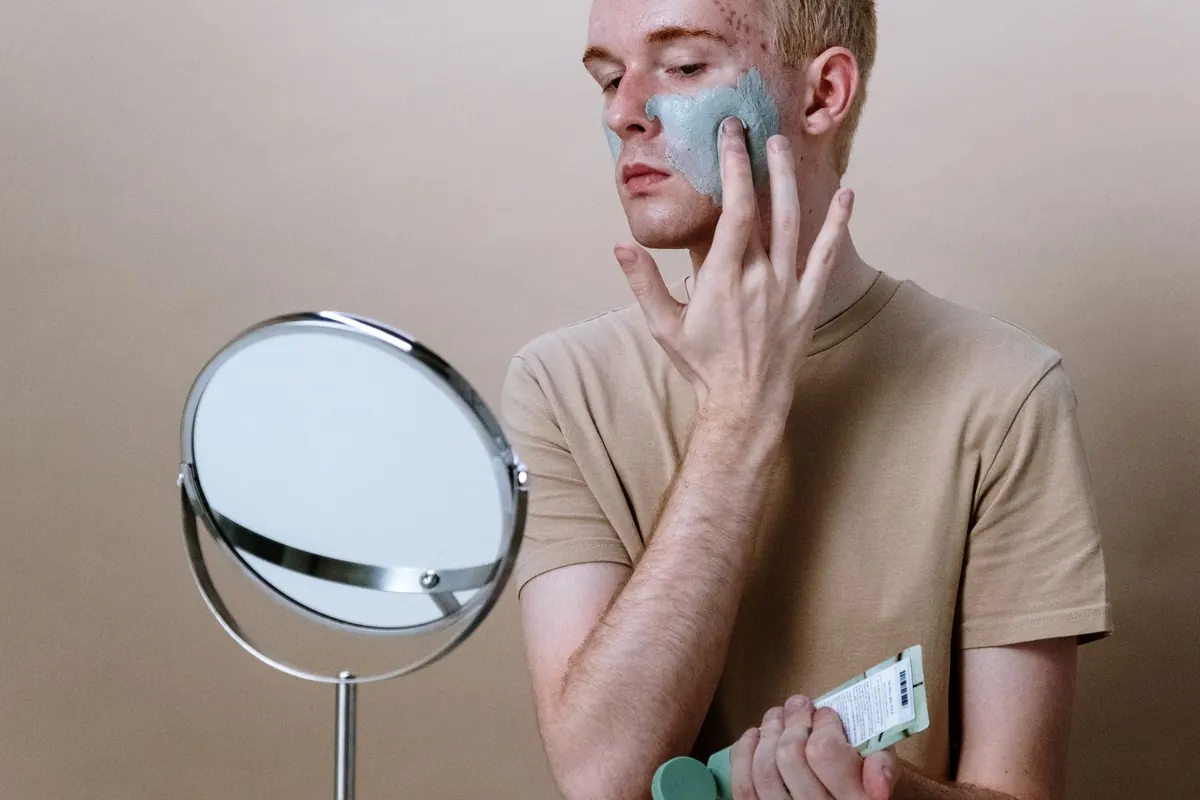
When a breakout appears, the instinct is to attack it with everything: benzoyl peroxide, salicylic acid, retinol, vitamin C, a clay mask. That combination often irritates skin into a worse breakout, and then it's impossible to tell which product is helping or hurting.
Introduce one new active at a time, and give it three to four weeks before judging it. Alternate nights rather than stacking. If you're using a prescription treatment, keep the rest of your routine simple and boring — a gentle cleanser and a basic moisturizer are the best supporting cast. For persistent, painful, or cystic acne, or acne that's leaving scars, it's worth seeing a dermatologist rather than experimenting further on your own.
If your skin is currently reactive, strip everything back for two weeks and rebuild:
Consistency beats intensity. Most breakout-prone skin improves when the routine gets smaller and gentler, not bigger and stronger. Give any change at least a few weeks, keep your hands off your face, and let your skin do the repairing it's designed to do.
Photo: cottonbro studio / Pexels
Previous Post
Cream vs. Powder Blush: Which Formula Suits Your Skin Type and Climate?
Next Post
How to Use Heatless Curling Methods Overnight: A Beginner's Guide